Beyond the Classroom
In education and the Arts alike, it is easy to become preoccupied with the final result: a polished essay, a flawless performance, a perfect grade. But true expertise is cultivated not in these static moments of achievement, but in the dynamic, often messy journey that leads to them. At St Catherine’s, we believe that the process of learning—marked by self-reflection, creative process, critical feedback, and persistent effort—is where real growth occurs.
Research shows that perfectionism is particularly prevalent among girls (Sand et al., 2021), with studies indicating continued increases in rates of perfectionism among adolescents (Curran & Hill, 2017). Perfectionism affects an estimated 25% to 30% of children and adolescents (Flett et al., 2016). In the context of music education, this drive for a flawless performance can sometimes overshadow the joy of discovery and self-expression, or what we would call ‘the journey’.
Studies have found that music students face increasingly high levels of perfectionism, which can stifle creativity and inhibit the development of a true musical voice (Herrera et al., 2021). Therefore, it is essential to create learning environments that encourage students to explore and embrace the unique opportunities music offers and look beyond a grade. Never has it been more important for our young people to start being comfortable with imperfection. By shifting the emphasis from achievement to personal growth and artistic exploration, our students can connect more deeply with music. They can find their inner voice, and experience the intrinsic rewards of learning, free from the constraints of perfectionism.
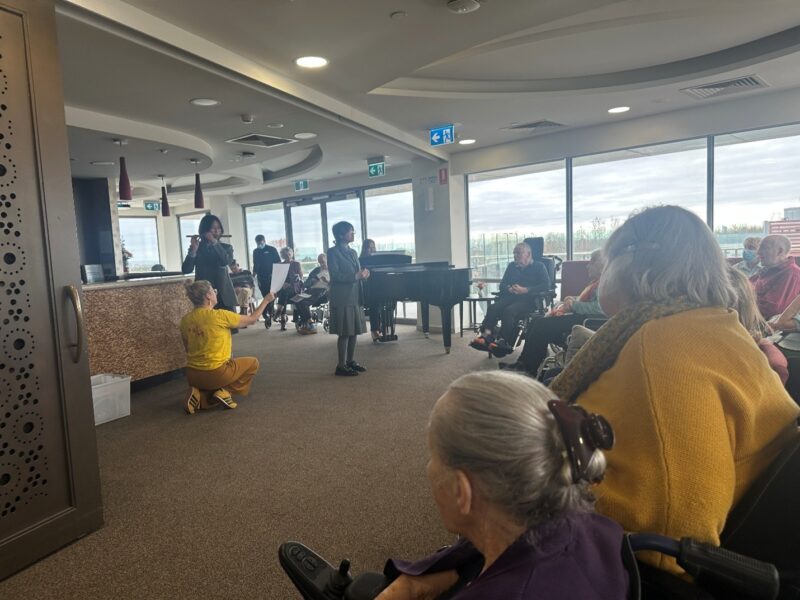
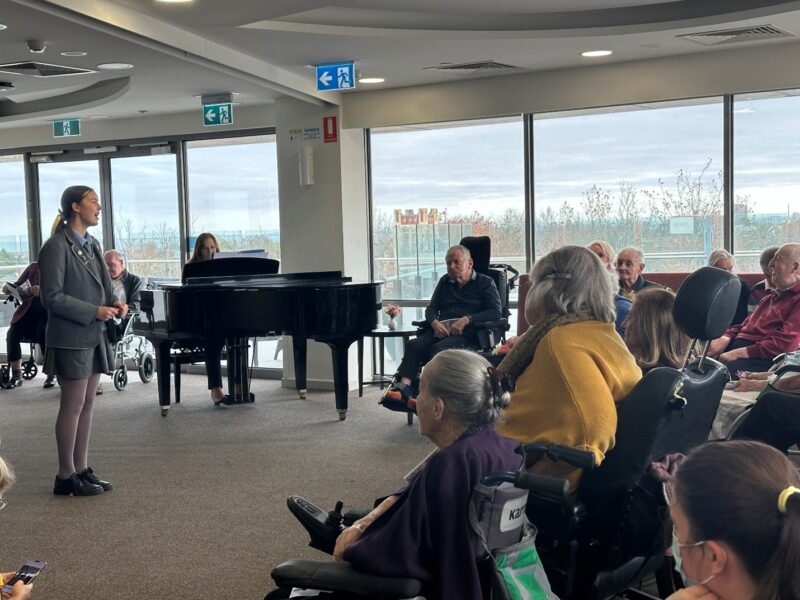
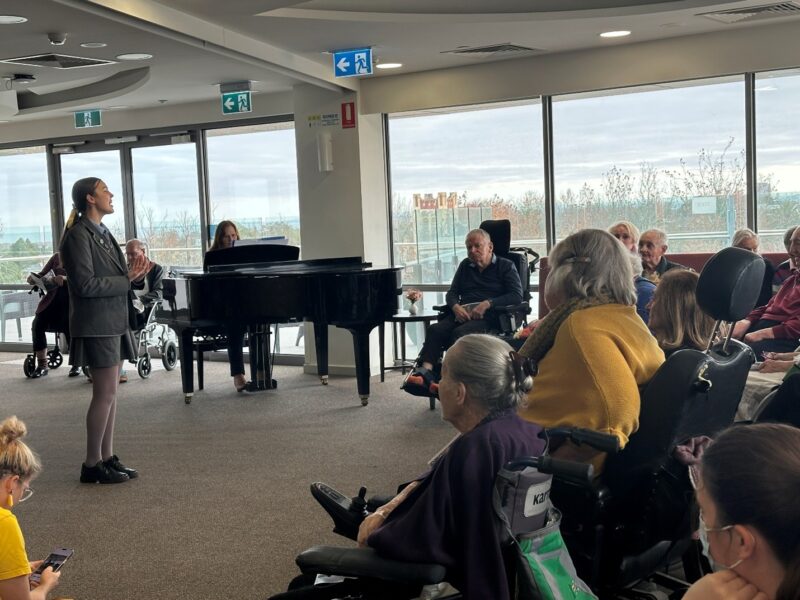
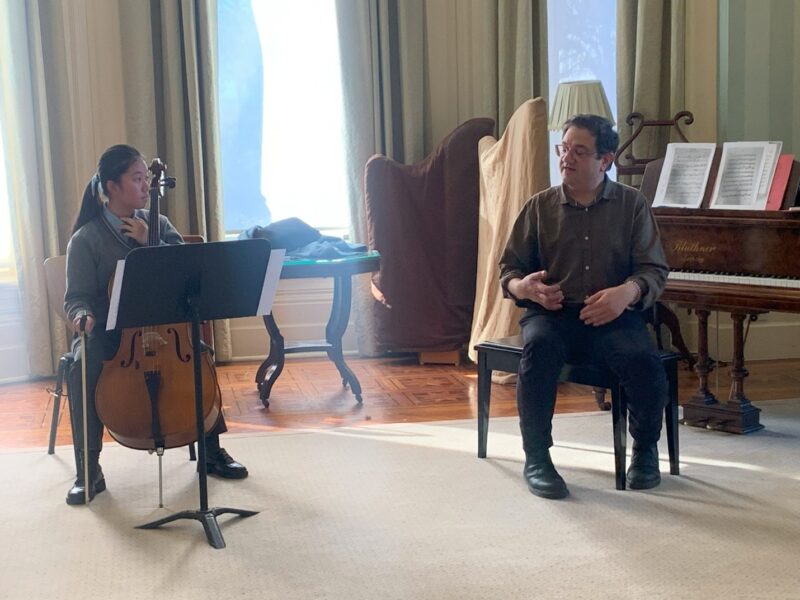
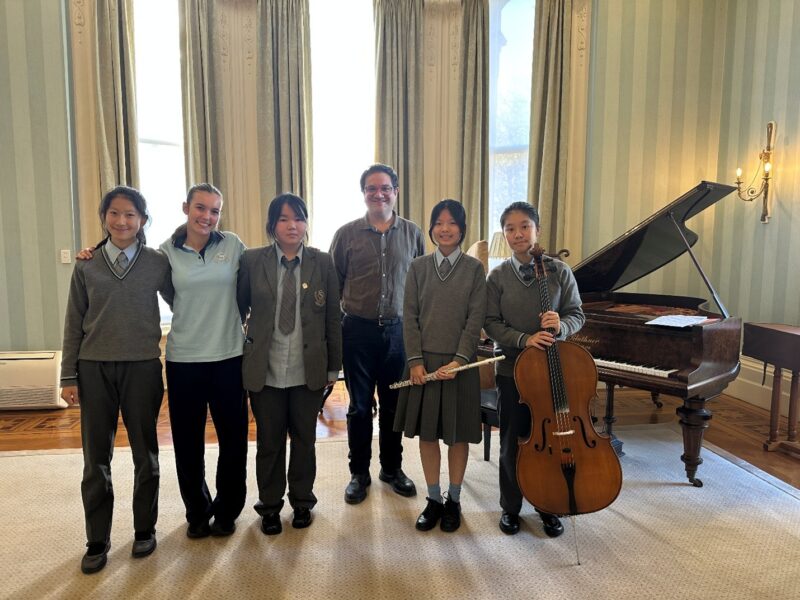
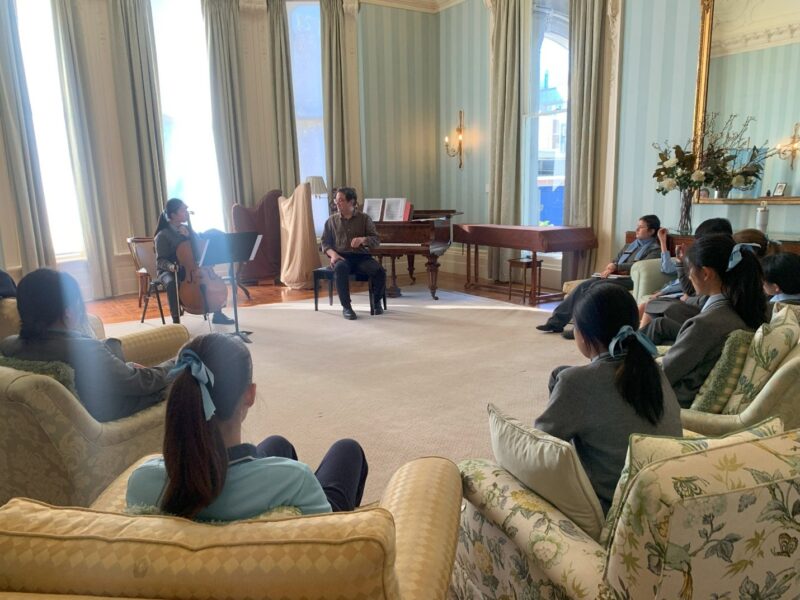
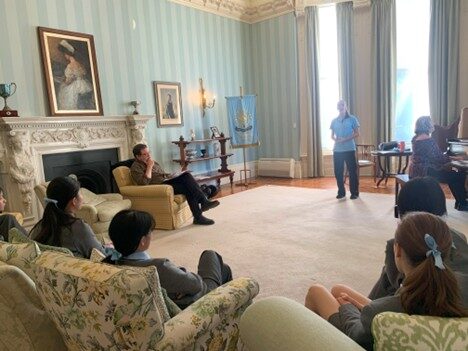
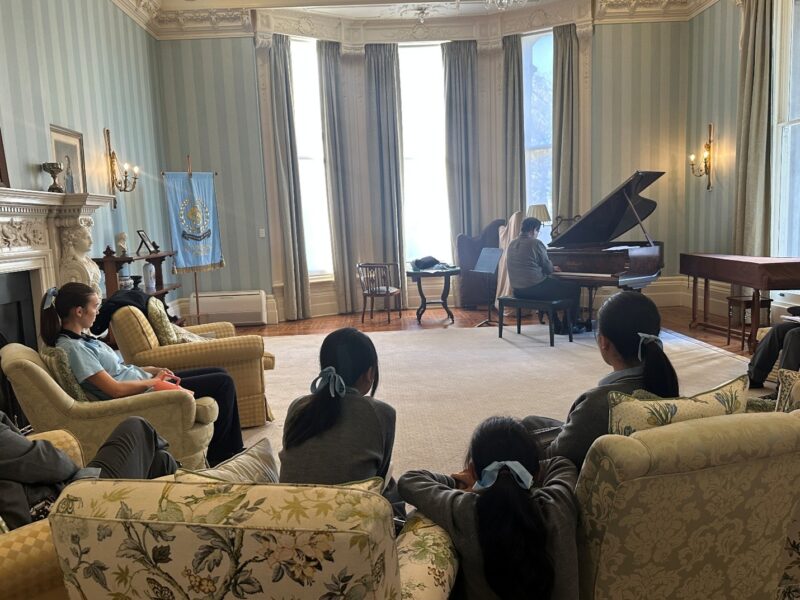
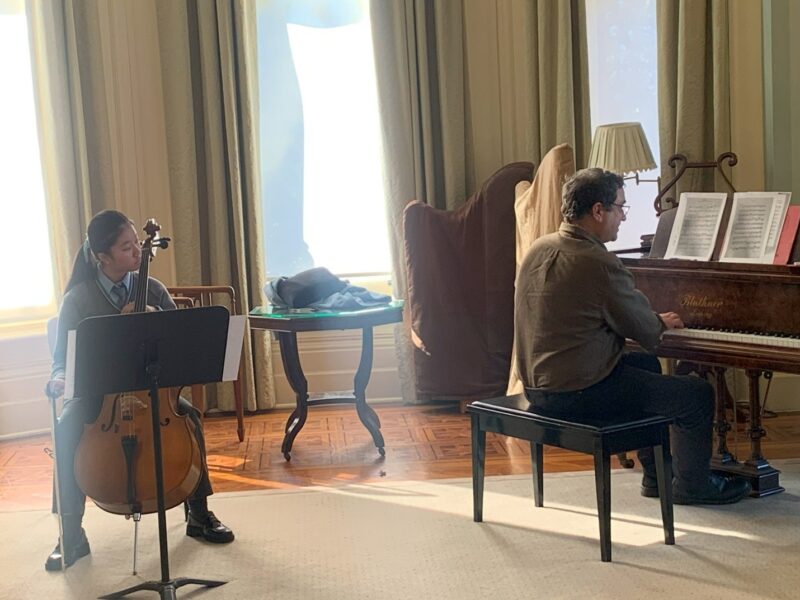
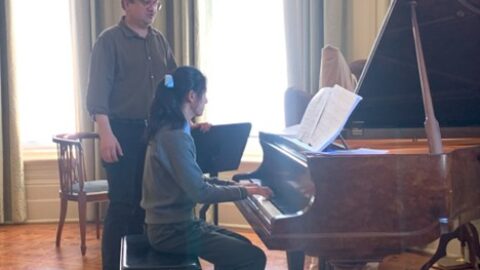
Recognising the need to foster such environments, the Years 9 and 10 Music Programs have provided students with a range of opportunities designed to nurture confidence and self-expression. Over the semester, students participated in workshops with alumni Coco Butterfield and Lilla Barrington, two former music students who are both pursuing tertiary studies in the Performing Arts. Students also developed their skills through masterclasses with internationally acclaimed Australian concert pianist Coady Green. Green, a past winner of the City of Sydney National Piano Competition who has performed at prestigious venues from Royal Albert Hall to Carnegie Hall, now lectures at the University of Melbourne. These enriching experiences empowered students to further develop their musical works and embrace the creative process. Their journey culminated in a concert at Regis Aged Care in Armadale, where students presented their final polished solo performances and concluded with a joyful ensemble sing-along featuring favourites such as Over the Rainbow and Georgie Girl. In this way, the program encouraged students to value personal growth and meaningful connection with others through music, rather than focusing solely on perfection. Reflecting on their experiences through the program, it was clear that our young musicians felt the same way.
Ms Liv Cher
Music Teacher & Head of E-Learning
References:
Curran, T., & Hill, A. P. (2017). Perfectionism is increasing over time: A meta-analysis of birth cohort differences from 1989 to 2016. Psychological Bulletin, 143(1), 18–33.
Flett, G. L., Hewitt, P. L., Besser, A., Su, C., Vaillancourt, T., et al. (2016). The Child–Adolescent Perfectionism Scale: Development, psychometric properties, and associations with stress, distress, and psychiatric symptoms. Journal of Psychoeducational Assessment, 34(7), 634–652.
Herrera, L., Westerlund, H., & Miettinen, L. (2021). The role of perfectionism in music students: A review. International Journal of Music Education, 39(4), 573–586.
Sand, L., Bøe, T., Shafran, R., Stormark, K. M., & Hysing, M. (2021). Perfectionism in Adolescence: Associations With Gender, Age, and Socioeconomic Status in a Norwegian Sample. Frontiers in public health, 9, 688811. https://doi.org/10.3389/fpubh.2021.688811
On Masterclasses
‘It was good to have feedback from
two people who were so experienced
and had gone to the School, who’d had similar school experiences to me. And
two people who had gone on to do music and performance work at uni and had
that experience too. I really trusted the process and feedback. It was really
nice to perform to people outside our
class. It was also so great to hear their
tips and strategies, because some of it were things I hadn’t considered before.
I ended up using Lilla’s feedback to perform with more confidence and
engage others into my final performance and really think this helped. Having different opinions from different people meant
I learnt so much through this experience.’
Ava Nachmias – Year 9
‘The masterclass was nerve-wracking but exciting. I really wanted to hear another musician understand and observe my playing. To be able to talk to them about what I am doing well, how I could improve, or another way to play different phrases.
I was so nervous at first but when we worked on the piece together this nervousness went away. After I played, Coady had so much to say. He is really strict about his own playing, and this helped me feel more comfortable about my own mistakes. It really made me think about the music in different ways.’
Elsa Zhou – Year 10
‘I was nervous, but only to begin with. When Lilla and Coco gave feedback, they were kind, and knowing they had stood in my shoes really helped me settle in to this experience. I was actually able to enjoy this performance and the workshopping of the piece, this surprised me. They had great feedback, particularly about my posture and stage presence. This ended up as one of my performance goals for the Regis Concert, and their strategies really helped me. I took just as much away from this as from the other assessed performances we’ve done.’
Olivia Liu – Year 10
On sharing a performance with others
‘My goals going into my final performance were to evoke emotion within the audience, express myself within the character of the song, and sing with precision. At my Regis performance, I could feel myself meaning every word that I was singing. My change in dynamics added a lot of emotional impact to my performance. I felt like my performance really reached the audience.
I think they felt this way because I was able to express emotion from within the song. The audience was so welcoming and kind, I would love to perform there again. My favourite part of this experience was being able to witness the performances of others as I could see how well they have progressed in their own musical skill, especially from the masterclasses.’
Lucy Lim – Year 9
‘I was both nervous and excited for our performance at Regis. I really wanted to show variety through my pieces and reach my top notes and I did this well. Making the residents smile and sing along to my pieces though, was the part that made me most proud. I think the older generations like seeing young people with a passion
for something. Given the opportunity
I would definitely love to do this again. Usually I would say that I care the most about how I perform, but on this occasion, it was definitely more important to me
as to how it was received by others. Rehearsing as an ensemble was also something I loved in the lead-up to this experience. It was a really special opportunity for all of us and I thought everyone’s performances were some of the best they had done! Everyone looked so comfortable and pushed through it, even when it was nerve-wracking.’
Olivia Grasso – Year 10
-

Embracing Imperfection image
-
Embracing Imperfection performance 1
-
Embracing Imperfection performance
-
masterclass 1
-
masterclass group
-
masterclass image
-

masterclass performance 1
-
masterclass performance
-
masterclass