Aquatics Program
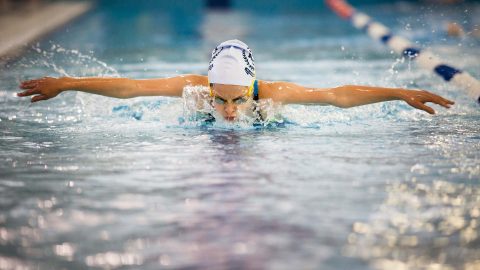
St Catherine’s provides a wide range of aquatic programs utilising our state of the art Marigold Southey Sports & Aquatic Centre.
We provide a wide range of Aquatic Activities at the Marigold Southey Sports and Aquatic Centre. During school hours, Physical Education classes operate throughout the day incorporating a range activities such as Diving, Underwater Hockey and Swimming and Life Saving Skills.
Through a range of different programs and pathways, our Sports Program provides students of all ability levels with an opportunity for both participation and performance and fosters friendships and School spirit amongst students, coaches, and parents.
One such element of this Program is St Catherine’s School’s Aquatics Program, which is available to our current students, parents, and members of our School community. A key component of our School’s Aquatics Program is our partnership with Melbourne Swimming Club (MSC). MSC offer a premium Learn-to-Swim Program – Melbourne Swimming Academy (MSA) – for our community, alongside a highly-successful squad swimming program. As a collective group led by former Australian Olympic Swimming Coach, Mr Ian Pope, Melbourne Swimming Academy and Melbourne Swimming Club are committed to developing a culture of support and excellence in partnership with St Catherine’s School.
Learn To Swim – Melbourne Swimming Academy
The Melbourne Swimming Academy offers programs to cater for children from the age of three, equipping students with fundamental swimming skills, technique, and water safety knowledge for safe and enjoyable participation in aquatic environments. Why MSA?
- Expert Team: The experienced teachers and coaches are fully qualified, passionate, enthusiastic, and committed to delivering a high-quality and engaging swimming program to all participants.
- Tailored Curriculum: We’ve carefully designed our curriculum to develop fundamental, and often overlooked, skills and techniques, and to correct common faults at key checkpoints along each swimmer’s journey.
- Small Classes: We limit class sizes to ensure students receive plenty of individualised feedback during their lessons and have the opportunity to build great rapport with their teachers.
- Achievement Recognition: We celebrate swimmer achievements in lessons and provide certificates to students as they move through the program. Parents are kept up to date with their child’s accomplishments and progress via our app.
Squad Training – Melbourne Swimming Club
After graduating from the Learn To Swim program, swimmers progress to our Squad Training programs.
Led by Former Australian Olympic Coach Ian Pope, MSC is committed to developing a culture of support and excellence, and believes in developing pathways for athletes to become future leaders in the swimming community.
Squad programs include:
- Pre-squad (Silver Squad – 1 session per week, ages 9-12) (Gold Squad – 2 sessions per week, ages10-12)
These squads focus on further developing the technique of swim school graduates and younger swimmer, as well as introducing them to the fundamentals of competitive racing. - Development Squad (3 sessions per week)
This is a squad of a higher standard than the pre-squad with a goal further develop swimming fitness, technique and racing skills to potentially move into the State level squad. - State, National Age and National Performance Squads (6+ sessions per week)
These squads are for swimmers who are working towards State and National qualifying times. Sessions include a mixture of strength and conditioning, using our state-of-the-art gym, swimming fitness and technique training, with the aim to develop racing skills.
To register your interest and find out more regarding the MSA Program visit www.melbournesa.com.au/