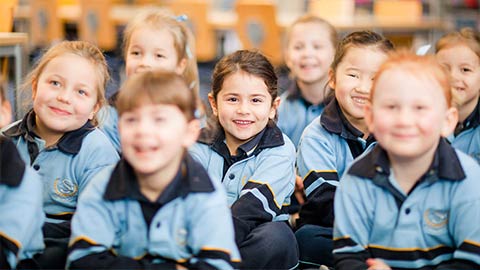
Who are you and who do you aspire to be?
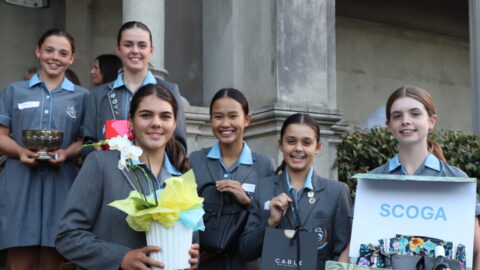
This year has seen 25 new students commence in Year 9. They have backgrounds from Toorak, to Wagga, Perth to the United States and China to the United Kingdom. Given this, our focus this term has been on belonging, connection, and self-concept.
Studies across education continue to show that Social and Emotional learning is critical to improving skills, attitudes, peer relationships, school functioning, emotional and academic outcomes (Durlak, Mahoney & Boyle, 2022). Belonging is at the heart of social and emotional learning. A sense of connectedness to one’s peers, school, and community increases agentic engagement, effort and often results in increased academic success (Cipriano et al., 2023). Belonging also seeks for students to look outward to assist others to connect, to understand different perspectives, develop empathy and seek common ground.
Central to all social and emotional learning is the idea of Self-Concept (Bong & Skaalvik, 2003). The three parts of this include self-image, the ideal self, and self-worth (Rodgers, 1959). This is developed over time and students learn to regulate and form self-concept from their experiences and interactions.
Across the term, Year 9 students have built upon both their self-concept and sense of belonging through a number of different experiences. The big question across our Cohort this year is, who do you want to be?
Year 9 Global Exchanges
Our five exchange students from St Catherine’s, Bramley and St George’s, Ascot in the United Kingdom have spoken at length as to how this journey across the globe has both shaped and challenged their sense of self.
Being able to adapt to Electives they were unfamiliar with, going from being an only child to one of three siblings in a household, trying rowing for the term, Vegemite, or performing with an orchestra for the first time are but some of the experiences that have enabled our exchange students to build upon their self-image, ideal self and self-esteem.
A new flock of peers with whom to connect has been integral to this. The exchange students were most grateful to all the Year 9 Cohort who threw them a surprise “cream tea” to celebrate their contribution, bridge connection and share culture. The host sisters were able to build upon the students’ self-concept as they delivered speeches outlining what they saw as the strengths in each of the girls.
“My most heightened sense of belonging at STC was at the English tea, which was so fun, and I felt so included. I loved the exchanges’ speeches which were really sweet, and I hope this is included for future exchanges too.” Rosemary Hill (Year 9 Beaulieu Blair, St Catherine’s Bramley exchange student).
In only a few weeks, the tables will be turned, and it will be time for nine St Catherine’s students to spread their wings and experience life in a foreign country, and for many more in Semester 2.
The girls will have the opportunity to develop self-confidence and resilience as they navigate the unchartered waters of a new culture, country, and school. They’ll learn to dance with the unexpected and discover how flexible their ideal self can be, be it through a flight delay, an unexpected international excursion or a new elective or co-curricular activity.
Curiosity will meet courage as they explore their capacity for a sense of adventure, be it a running trail in the Canadian woods, a school trip to Paris, trying an English delicacy for the first time or enjoying the triumphs and challenges of boarding school. The students will discover their capacity to step into the unknown. Not only will this experience provide them with cross-cultural learning, but the international context provides a mirror in which to see themselves reflected in a new context; their strengths will be magnified, and challenges will be illuminated. It is through this mirror that the students will be able to build upon that very notion of their ideal self, self-image, and self-worth.
Leadership Diploma and Duke of Edinburgh
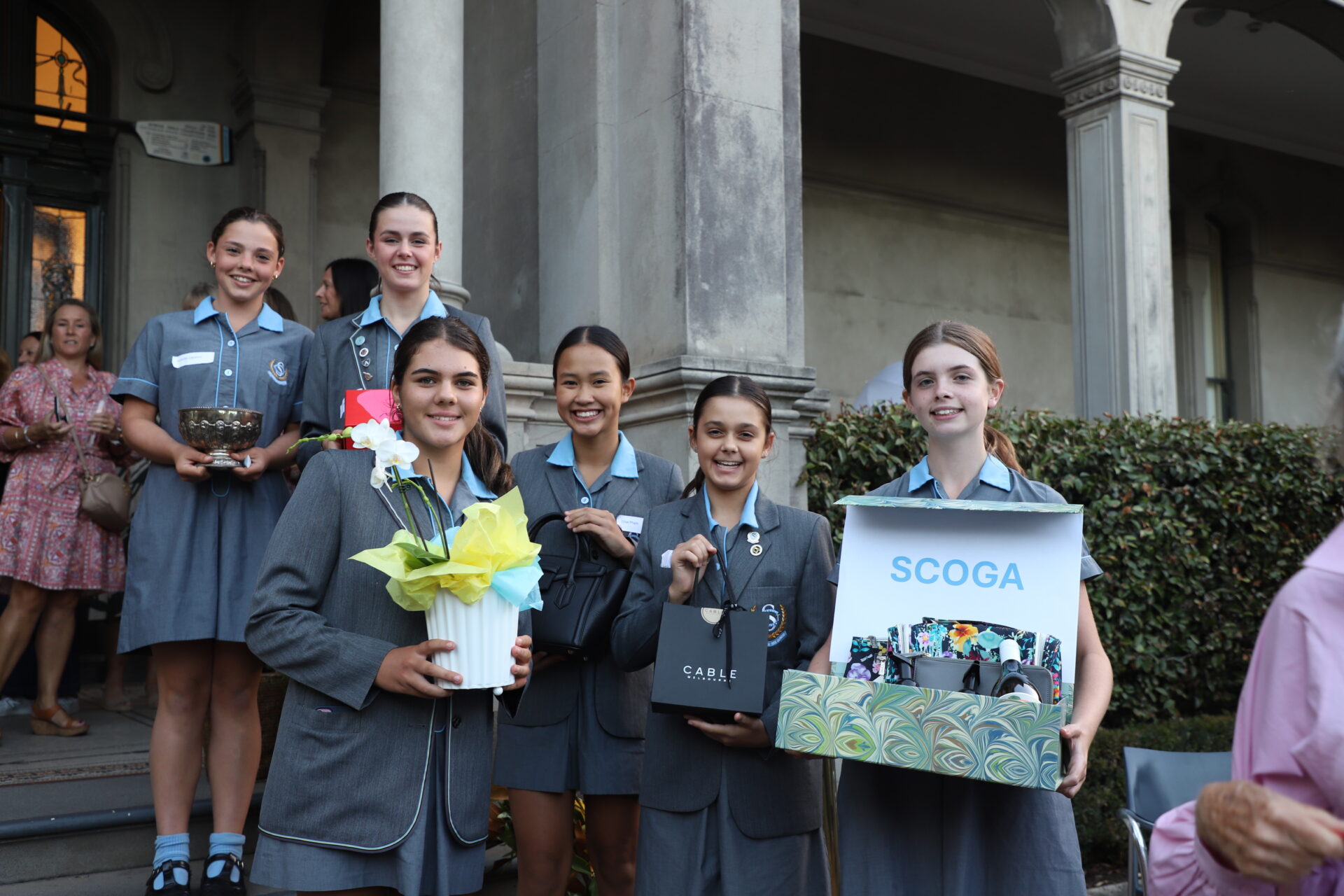
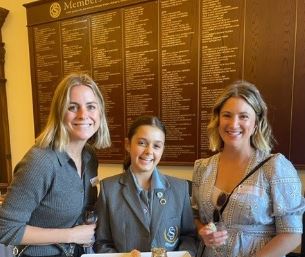
Students across the Year 9 Cohort have embarked upon St Catherine’s unique Leadership Diploma and many have signed up for the Duke of Edinburgh. An integral part of both programs is the volunteering component. Through this, students have found themselves connected to community, found their strengths and have been able to make a contribution. In many cases, students have discovered a passion or new skill. Here, they have developed a belief that they can make a difference, through coaching, raising money, lifesaving, presenting to younger students and running programs for others. This has seen them engage in enriching environments, whereby through conversations with people they don’t regularly liaise with, they’ve developed their perceptions of their ideal selves and self-worth. It was high praise from the President of the St Catherine’s Old Girls’ Association (SCOGA), Ms Anna Foley (‘92), when remarking on those who had served at the recent SCOGA reunions saying:
“…how proud we were of all the girls who signed up to support the many events over the Reunion Weekend. They all eagerly stepped up to their duties. They were keen to serve and asked many questions when they weren’t sure what needed to be done next. Their enthusiasm and willingness were outstanding. The SCOGA Committee enjoyed working with each of them and felt the girls added to the success of the weekend. They weren’t there just doing odd jobs; they were integral to its success. We all witnessed the girls grow in confidence over the weekend and we had many guests saying how brilliant the students were at engaging with them all, whether through selling the raffle tickets, passing around food or talking about what they are studying, or general life at School now. The volunteering organised through the Leadership Diploma was a great vehicle for SCOGA to introduce the girls to the vast network they are part of. We not only encouraged them in the jobs of handing out names and handing around food, we were also introducing them to guests and softly showing them the art of networking and sharing stories to create connection.” Ms Anna Foley (‘92), President of SCOGA
 |
 |
Wellbeing Program – Knowing your strengths
Knowing our strengths helps us feel a sense of belonging with ourselves and builds self-awareness. It helps us to navigate the experiences we have in life. Strengths are the capacities that we have for feeling, behaving, and thinking that support our wellbeing (Proyer, et al., 2015).
Over the term, Year 9 students undertook a Values in Action (VIA) Survey of Character Strengths to measure their profile. This survey is designed around scientific literature which identifies 24-character strengths that each of us exhibit or have the propensity to develop. Through the program, students not only began to identify their strengths, but they worked in pairs to understand the strengths they see in each other and discuss those that they hoped to develop.
Many studies have looked at the effects of interventions which look to uncover, explore, and deliberately practise strengths. The results of learning in this area are shown to increase satisfaction, engagement, and happiness (Park & Peterson, 2009). Understanding and applying one’s strengths is crucial to our being. As students move to develop their leadership skills, they cannot do it without knowing themselves. During the course of the term, students noted that they don’t often think about their strengths and to do so, definitely felt different. They looked to the pressures they are facing now and how their strengths can help them navigate this. They also talked about what strengths they hope to develop.
“It was good to reflect on my strengths. It helped me understand what to work on, but I also felt happy with the strengths that I do have. When others told me about what they see as my strength, it was really nice. Because it’s not like you look in the mirror and think about yourself as courageous. I felt really respected for who I am. Courage and gratitude help me navigate the pressure of tests. Gratitude, because I am grateful for the score, for what I am able to achieve and what I have been able to learn. Courage, because I can face a test head on.” Sophie Wang (Year 9 Holmes Kilbride).
♦
“I see in myself that I am collaborative and self-aware, I know what suits me in terms of how I learn. Others saw in me that I am compassionate and upstanding. I was surprised that others could see this in me, it made me feel really positive. To talk about my strengths was hard. I felt a bit awkward to talk about myself to be honest. I don’t really think about these things. When others spoke about me, it felt so genuine and nice. It’s not that I don’t believe those things, but what I saw in myself was different to what others saw. It made me see myself differently. Going on exchange whilst trying to keep up with my work is a pressure I feel. With the strengths, in being collaborative I feel comfortable to ask others for help. As I am self-aware, I know what I can and can’t do, and I know that exchange will be really good for me, it’s something to push me outside my comfort zone, and I need that. I would like to develop being adaptive, to be better at accepting change, knowing I am not going to be good at everything. It is possible to get better at this. It might be something that will happen over time, but it will require me to have an open mindset.” Elise Pham (Year 9 Langley Templeton).
♦
“I sometimes feel the pressure of myself. My expectations are sometimes really high, and I can’t always seem to catch up with them. I am determined and that will help me face my challenges head on. Being grateful helps me too, because if I can see the good in situations, even the challenging ones, I will get the best out of them, the best out of life really. Looking at my strengths makes me feel more grateful for the things I have, the things that are in my control, and for what I can do. We do need to reflect on what we can control, and it gives me a better picture of who I am. When others spoke of my strengths, it was like getting a compliment. I am happy that someone else can see my strengths, that they can see me, it is really nice. I would like to work on being more adaptive. I try to adapt to things well, because I don’t always get what I want and things happen in life, but I think I need to be more mindful and learn a bit more how to fail well.” Polly Moir (Year 9 Langley Templeton).
♦
“It felt a bit weird and different to reflect on my strengths. I have never really thought about it. It was nice to know that others see what I see that it isn’t just what I think. To help overcome pressure I feel, being purposeful will help, because if you are positive, it gives you a good mindset around everything else. Being determined is also something that can assist. Experiences that you persevere through make you more positive. I would like to develop my capacity for being adaptive and forgiving. I am not great at that. You need to be able to forgive so that you can move on and build relationships. I hate failing at things, and that is really tough when it comes to adaptability. I need to recognise what I can do better.” Angelica Katsambanis (Year 9 Langley Templeton).
♦
As we conclude the term, it’s evident that the journey of social emotional learning and self-concept is ongoing. Our Year 9 students, across diverse backgrounds and experiences, have embraced challenges, cultivated, and recognised strengths, and formed deeper connections.
As they continue to navigate the path of adolescence, they carry with them a growing sense of self-awareness, resilience, and empathy. The question of “who do you want to be?” echoes not just in their minds but in their actions, as they embrace each opportunity for growth and self-reflection.
Ultimately, it’s not just about reaching a destination, but about the journey itself that shapes us into who we are becoming.